Project: 0→1 Product
Role: Product Designer
Skills: Systems Design, Spatial Design, Emotional Design
Tools: Figma, Notion
Complete product design for a privacy-first community network. Created navigation systems, consolidated help, and intentional friction to build product trust.
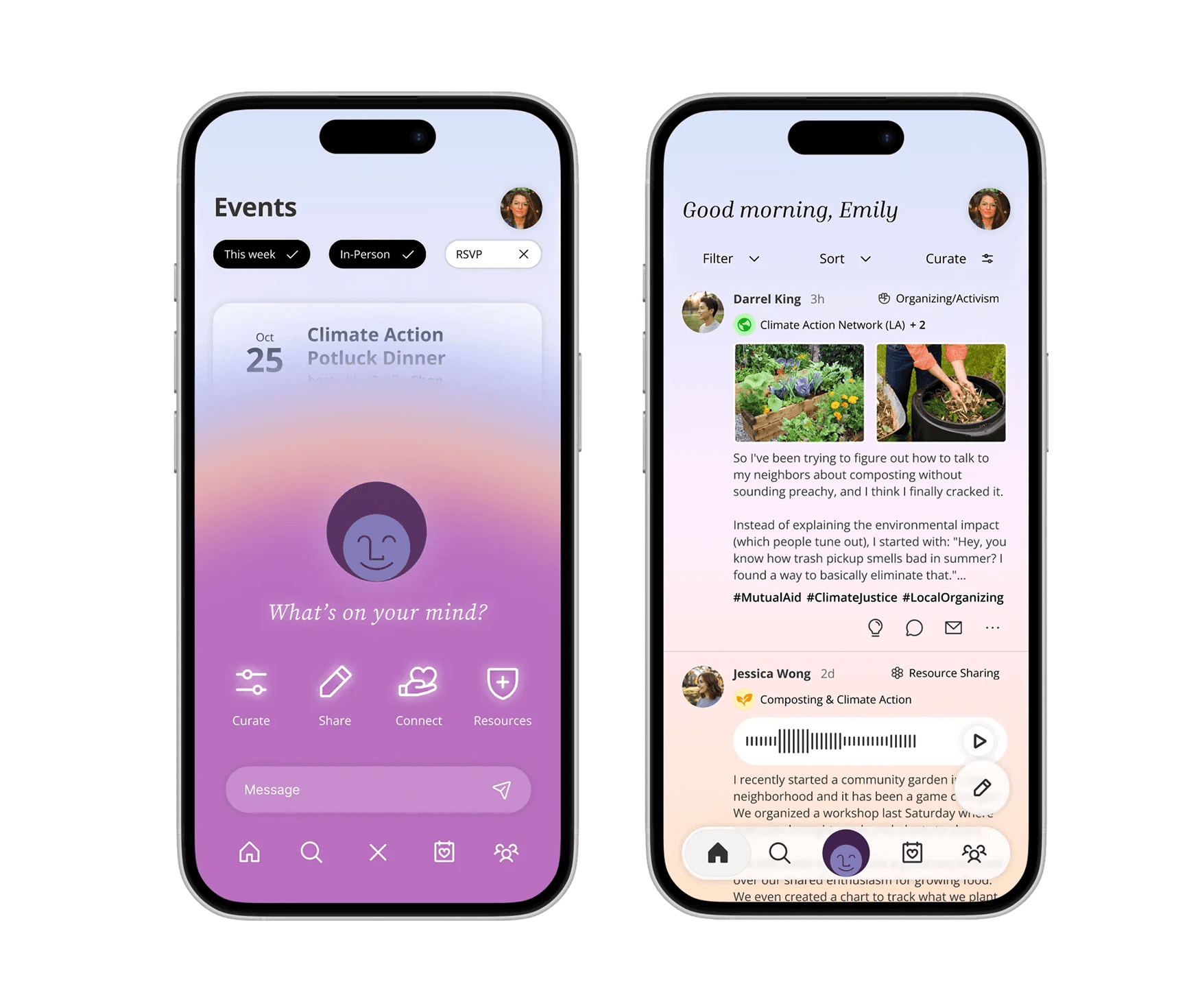
Designing trust and transparency
While most social platforms optimize for persistent engagement, Humma does the opposite. Built for vulnerable communities, it removes likes, follower counts, and infinite scroll entirely. My job was translating those principles into real experiences.
Navigation as Trust-Building
For platforms serving people who've been failed by systems before, navigation goes beyond wayfinding. My cognitive science background taught me that spatial disorientation triggers immediate anxiety. Users get a similar feeling with digital spaces - feeling lost in an interface erodes trust and composure.
I designed around one principle: users never lose their place. Opening the concierge pulls up a bottom sheet halfway up the screen, with your previous page remaining visible behind it. Start chatting and the sheet expands, but you still see whitespace at the top grounding you. The same pattern applies to story creation - tap outside or drag down to minimize.
Sticky headers work similarly. Page controls stay visible as you scroll, floating above content with a blurred background.
Consolidating Help
Early designs had a persistent resource shield floating on every screen, which opened a directory of services. While this ease of access was aligned with brand needs, it created visual bloat and mental friction. The Humma Concierge was emerging as another location where users could seek help, and two separate paths meant users had to categorize their need before getting support.
I consolidated everything into the concierge in the central navigation. "Resources" became a quick action that opens crisis support from this menu, and users can also simply begin sharing and get contextual help through conversation.
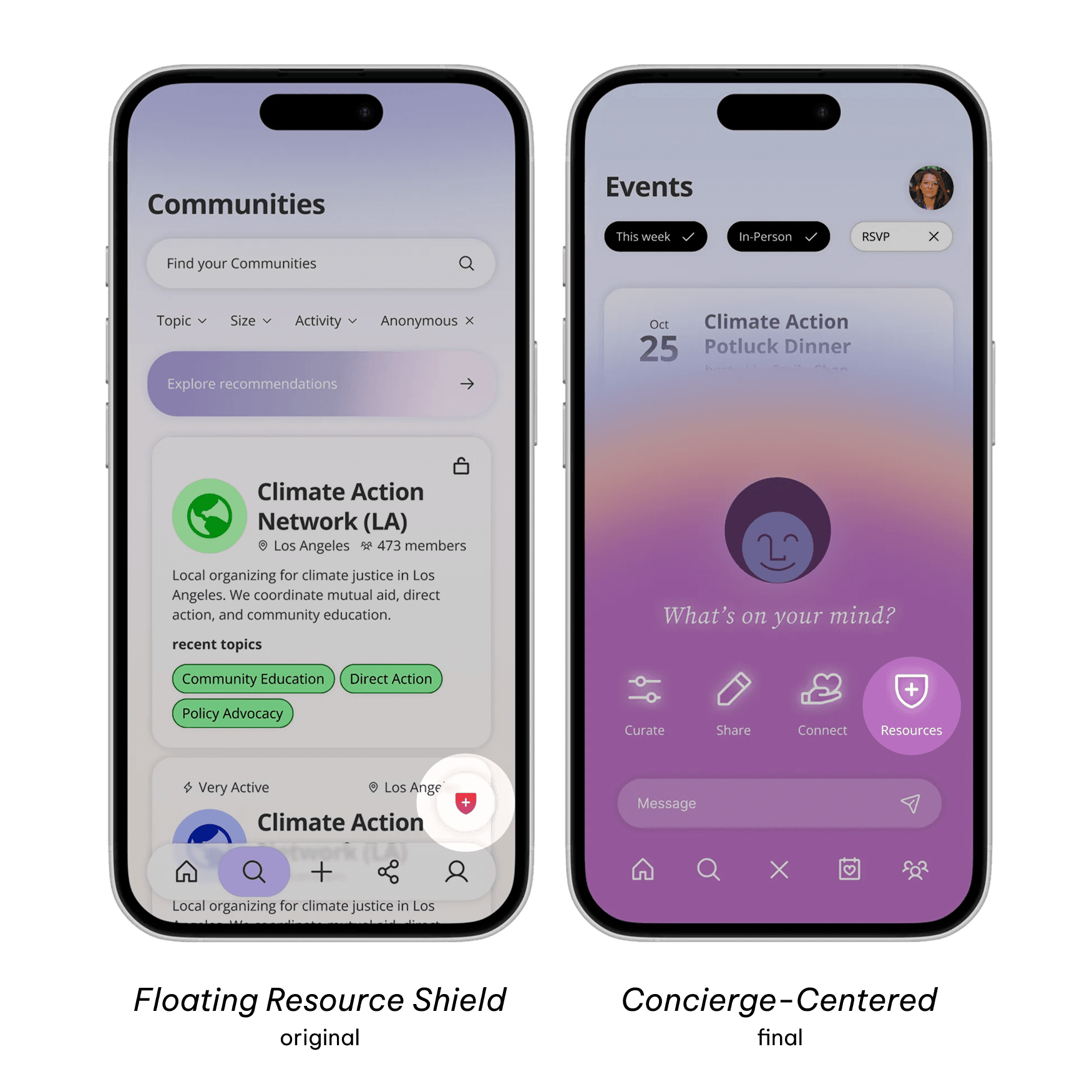
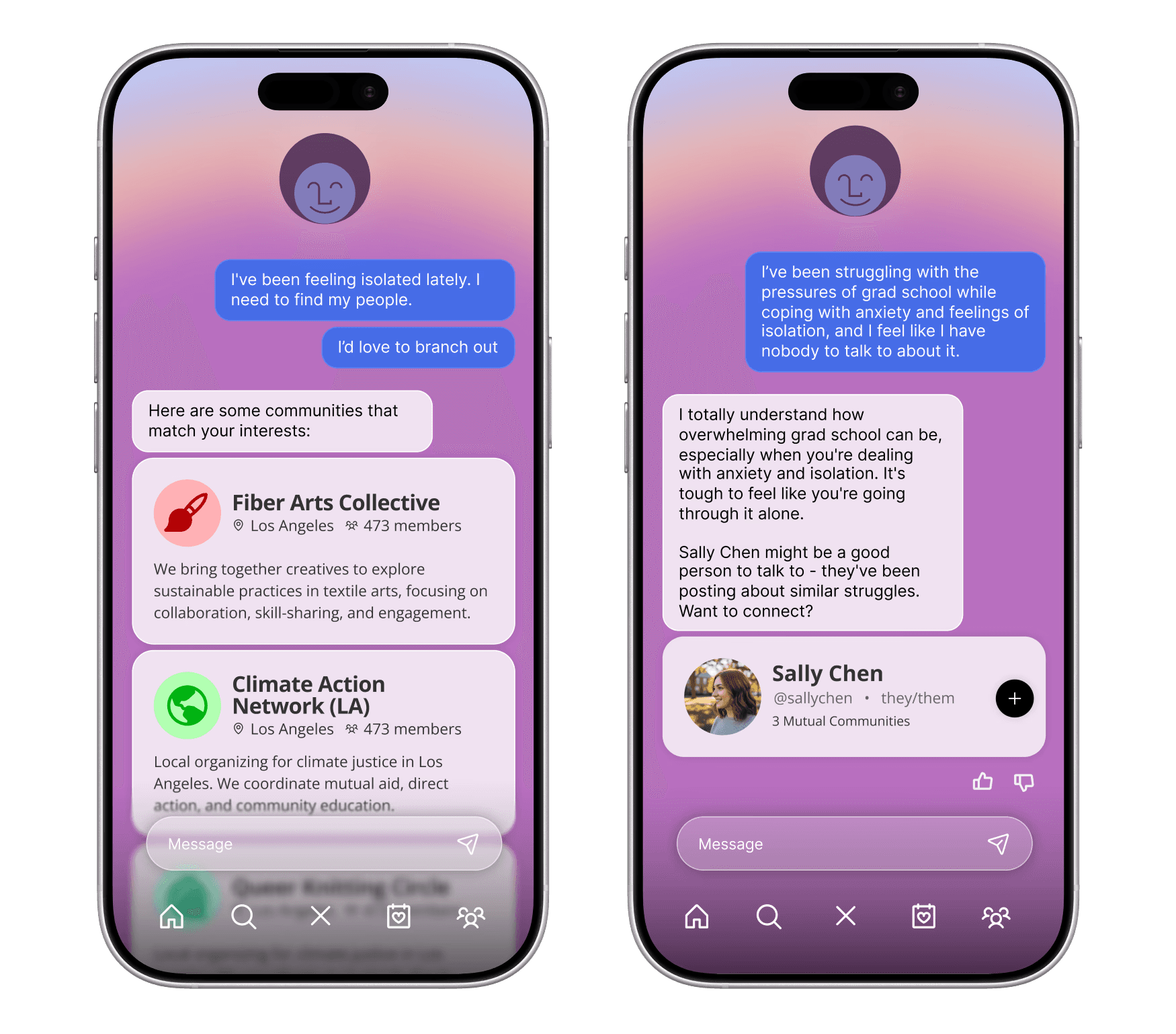
A closer look at the concierge experience. One interface and mental modal for all types of needs.
Designing Intentional Friction
One of Humma's founding principles is intentional engagement, and Infinite scroll is an attention trap most platforms rely on for user retention.
I designed manual loading instead: After 10-15 posts, a button needs to be held before more content is loaded. This interaction requires intention and creates a natural check-in point to consider if you’d like to continue.
Reflection
My emphasis on easy navigation promotes a sense of dignity through bottom sheets that preserve your place in the app.
Help consolidation makes empathy accessible by bringing all resources into one trusted place.
Hold-to-load friction gives control to users rather than an algorithm
Throughout this product, I applied spatial design, emotional design, and systems thinking to turn brand values into tangible experiences users can trust.