Project: Partner Project
Role: Product Designer
Skills: User Research, Interaction Design, Prototyping
Tools: Figma, FigJam
Asynchronous preference collection that gives leaders confidence and everyone a voice - by making input effortless
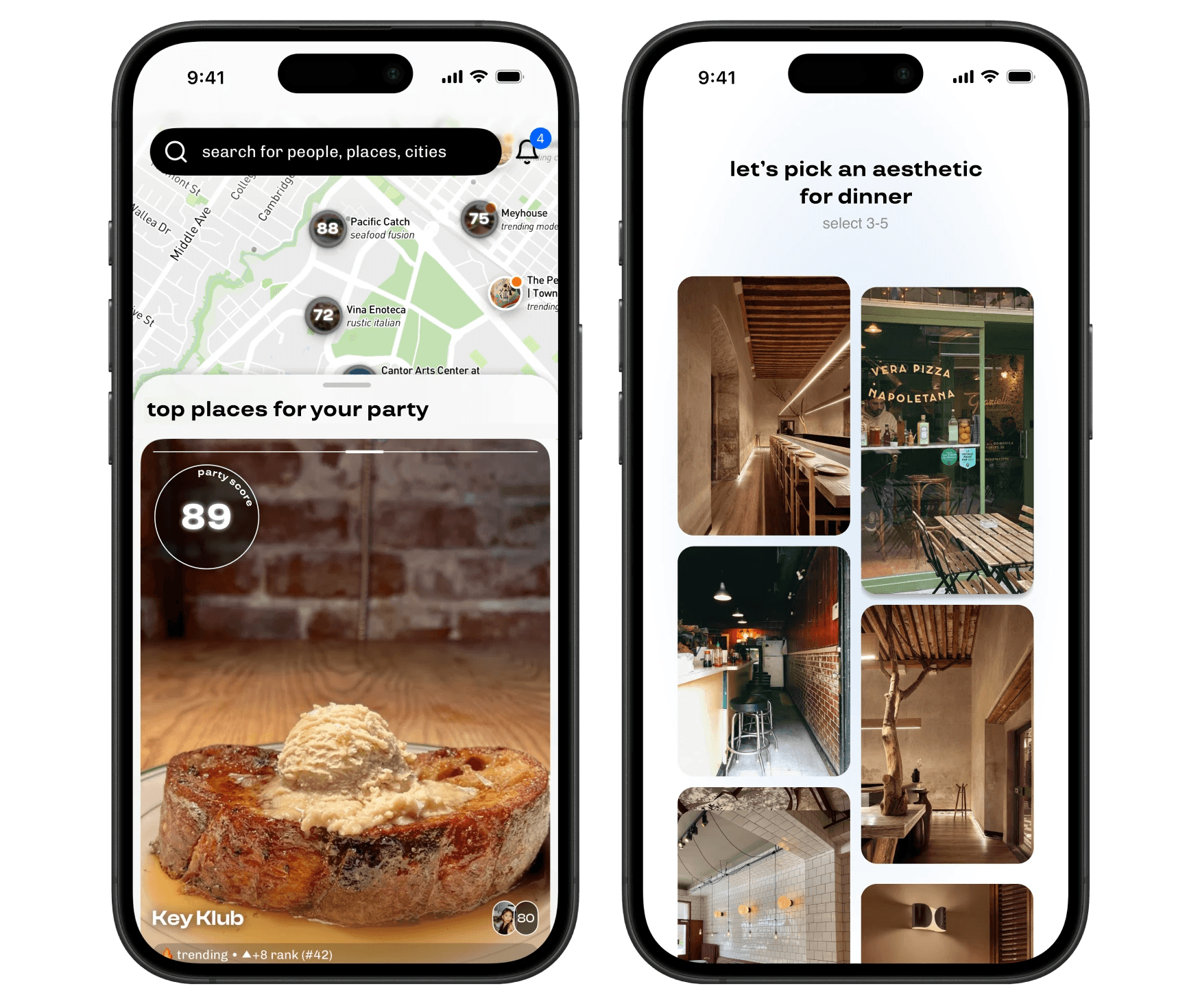
The hidden cost of "anything's fine"
When someone says "I'm down for whatever" in a group setting, they're usually just picking the path of least resistance.
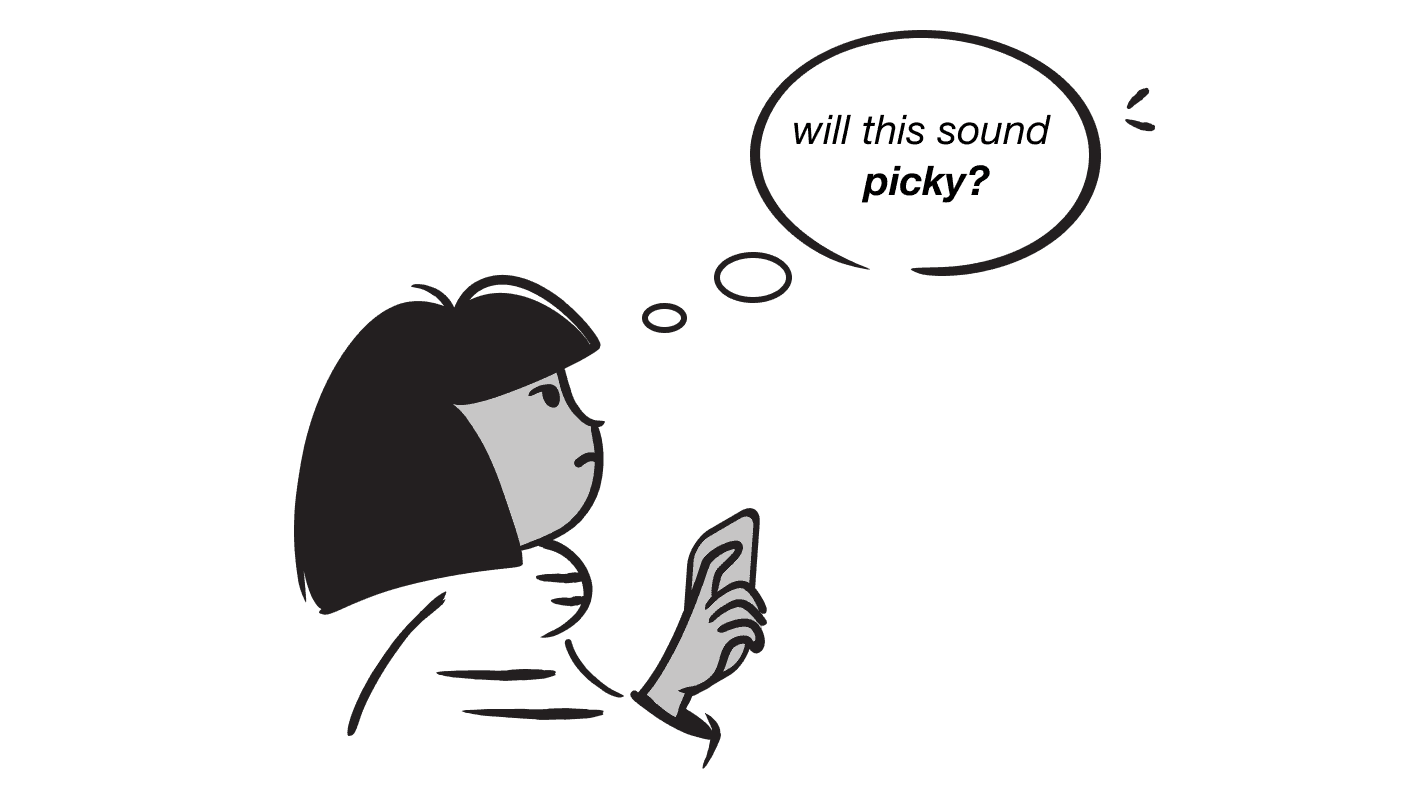
Actually expressing a preference takes more effort than it seems. You have to figure out what you want, guess how it'll land, and commit before knowing what anyone else thinks. That's a lot of mental energy for a casual hangout.
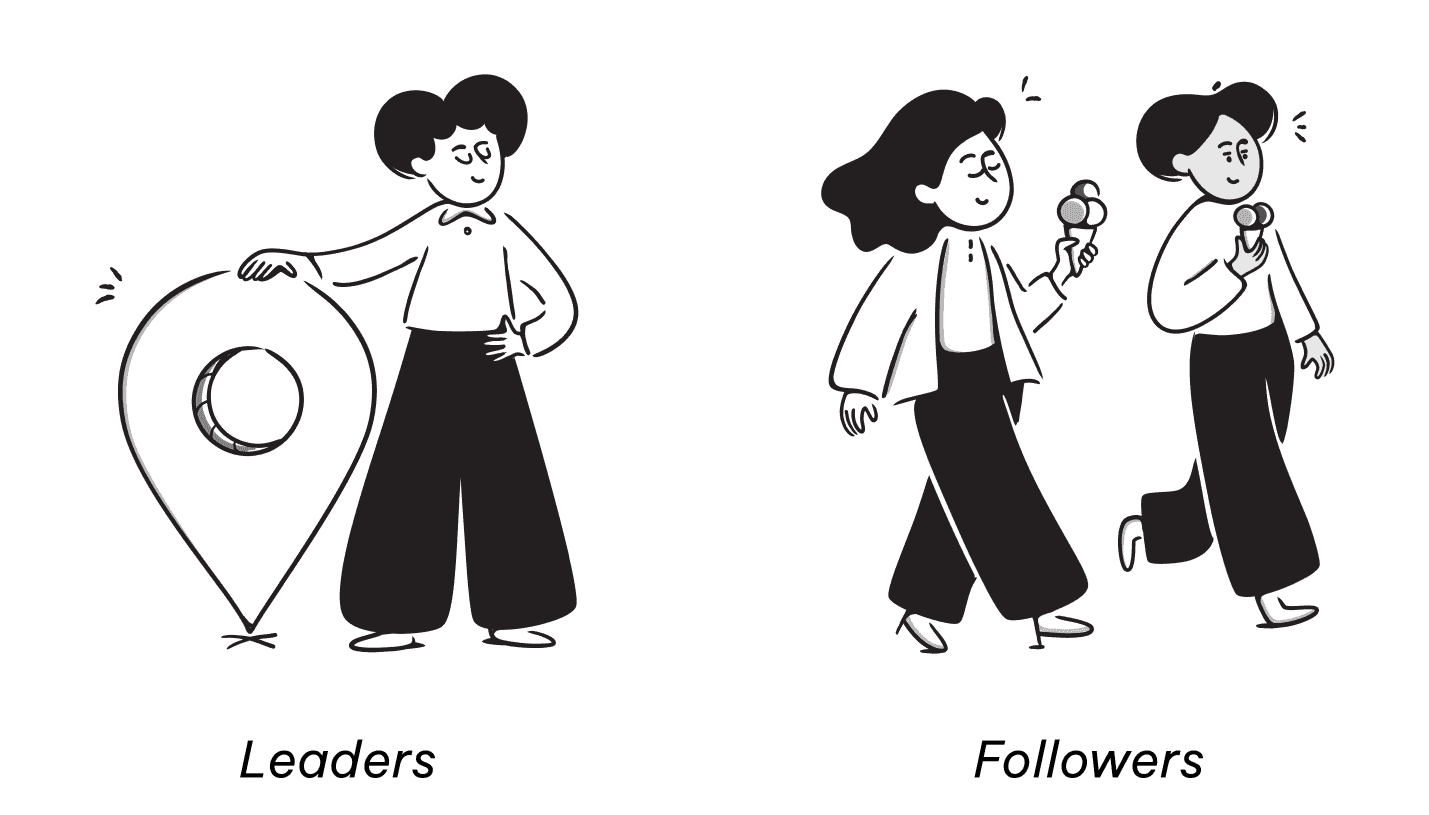
Leaders and Followers
We interviewed 6 people and noticed two roles that tend to emerge in group planning. These aren’t personality types, just modes people fall into.
Leaders start the plans and carry the decision burden. They want input but rarely get it.
People don't contribute, yet still critique the plans if they don't like them.
Emilio, leader
Followers have real preferences but don't voice them. They'd rather not steer the group or feel like they're being demanding.
I'd like to share some preferences. I'd rather not be the one who decides though.
Aurora, follower
How might we get full group input without forcing anyone into a role they're avoiding?
Corner Jam
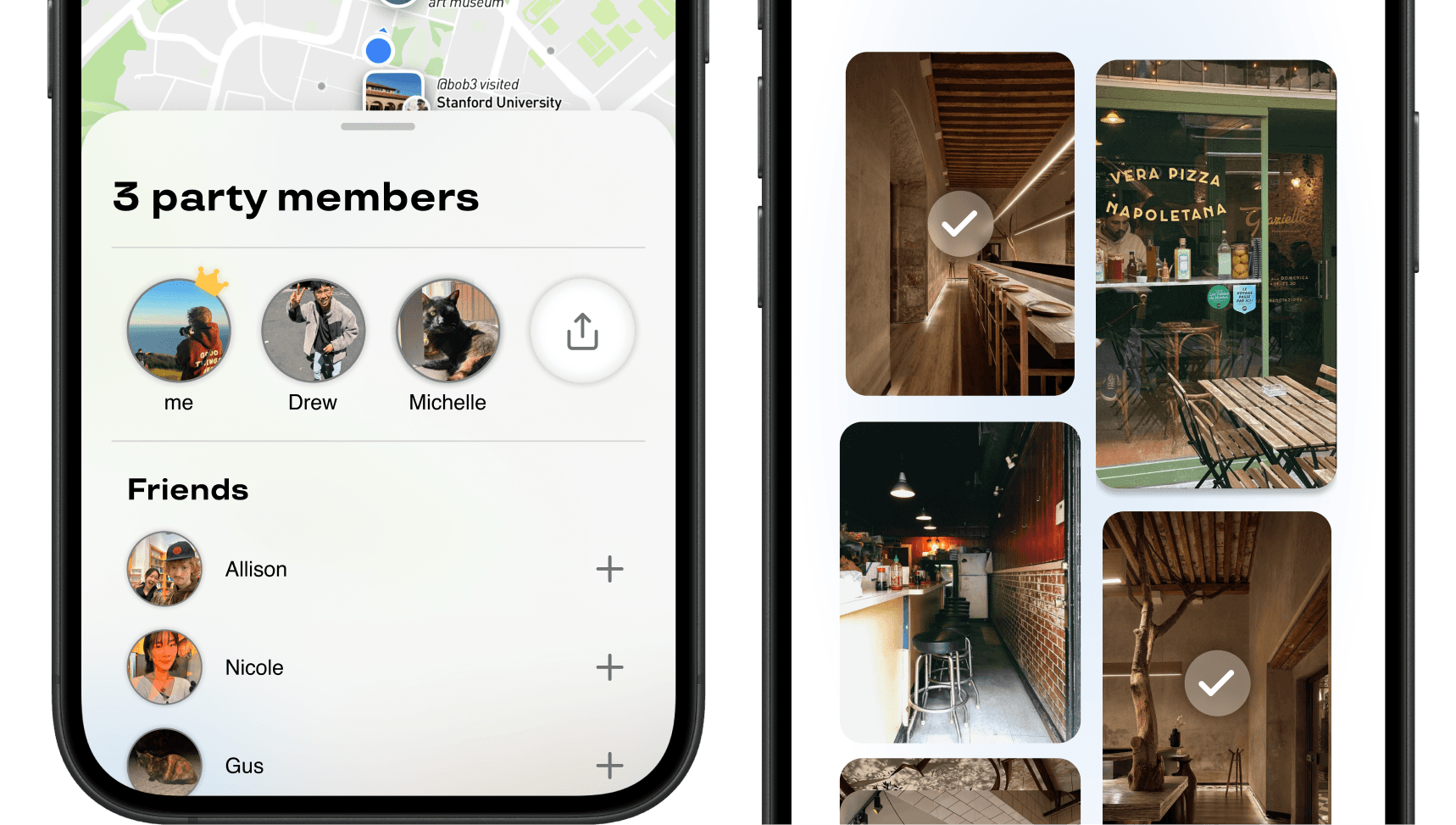
Corner Jam is a feature concept for Corner, a social mapping discovery app. We studied Corner's existing design language to make it feel native - only adding a button, an overlay, and a form
It collects preferences asynchronously through a quick form, then shows "party scores" based on aggregated preferences.
Impact:
Full group input (vs. 20-30% in typical group chats)
<1 minute per person - 6 simple inputs, no download or account required
Data-backed confidence for leaders - party scores replace guesswork
No more "down for anything" dead ends - followers contribute without decision pressure
How it works
For Followers
Receive a link (no app needed)
Pick a vibe from image tiles
Set logistical preferences
Submit (<1 minute total)
For Leaders
Tap the party icon on the map
Choose the activity category
Invite friends via app or share sheet
Watch responses come in
Browse with party scores
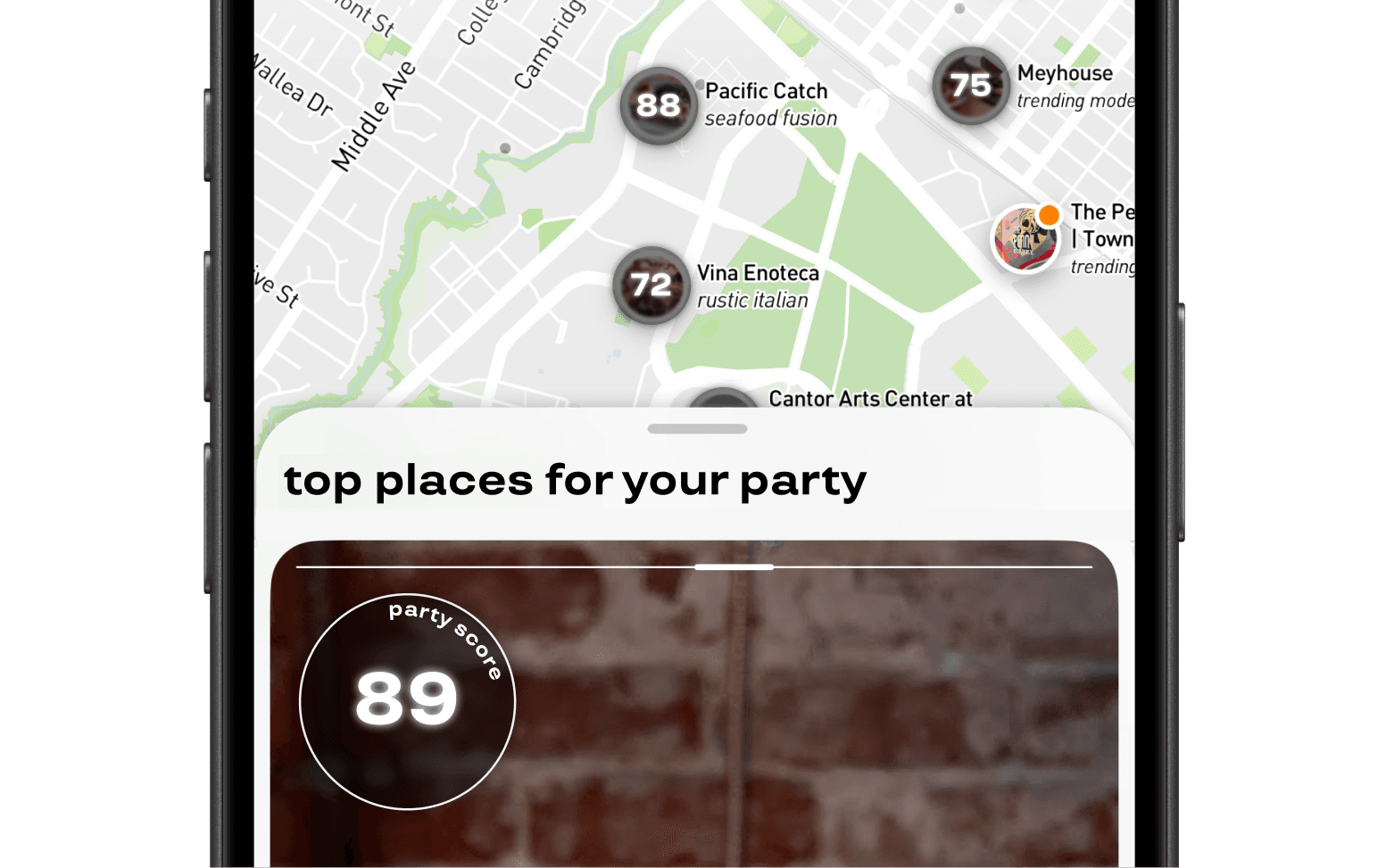
Scores show group fit at a glance and update live as people respond.
Design Decisions
Group planning has hidden cognitive costs: formulating preferences, anticipating reactions, committing under uncertainty. Each design choice here targets a specific point where effort usually kills participation.

The mental cost -> the fix
Formulating preferences on the spot -> participate when you want to
Group chats put you on the spot. A private form lets you contribute when you're ready, and without an audience.
Describing what you want -> visual tile inputs
Picking from images is faster than reading options, but the real win is that you're recognizing a vibe instead of trying to describe one. Recognition beats recall.
Downloading an app / signing up -> Link-based, no account required
Every extra step gives followers another reason to bow out. Without an app download or signup, there’s as little friction as possible to participate.
Validation
This is a concept that has not been integrated into Corner. We validated our solution by mapping it back to what we heard in research:
Insight | Solution |
|---|---|
Leaders want input but don't get it | Asynchronous form enables full group input |
Followers have hidden preferences | Private form removes decision pressure |
Decision burden isn't shared | Party scores shifts the process away from guesswork |
If shipped, we'd measure:
% of invited followers who complete the form (target: >70%)
Time to complete form (target: <60 seconds)
Post-hangout satisfaction (did using Corner Jam lead to better outcomes?)
Reflection
The tricky part of this project was that the friction we addressed is invisible. Nobody thinks "I'm not contributing because expressing preferences in a group setting is cognitively expensive." They just say "anything's fine" and move on.
You can't rely on users to articulate a problem they don't know they have. You have to notice the gap between what people say ("I don't care") and what's actually happening (they do care, they just won't pay the cost to say so). The fix is to make contribution as easy as possible, rather than asking people to contribute more.
Corner Jam adds a button, an overlay, and a form. It’s a relatively small change, but it addresses the complete issue.